Belarusian State University (BSU), Belarus – Study Guide for International Students
Explore Belarusian State University admission, programmes, eligibility, documents, tuition, accommodation and practical guidance for international students.
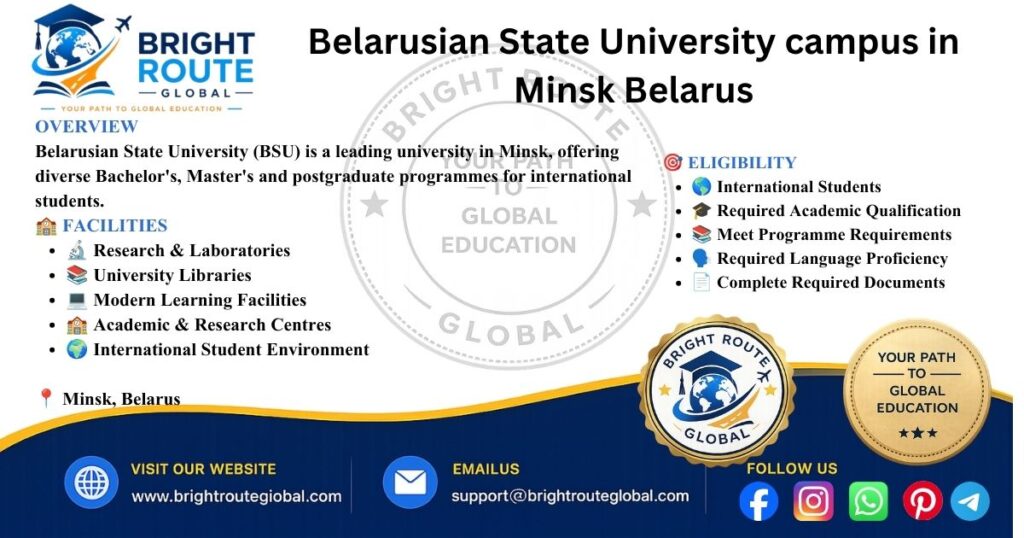
Belarusian State University (BSU) is one of Belarus’s leading higher education and research institutions, located in Minsk, the country’s capital. The university offers a broad range of programmes across natural sciences, humanities, social sciences, technology and other academic fields.
For international students, BSU can be an attractive option for those looking for a European university environment with diverse academic programmes and opportunities for international study. Applicants should, however, carefully check the latest admission, tuition, visa and scholarship information directly with the university before making financial or travel arrangements.
University Overview
The Belarusian State University was established in 1921 and has developed into a major educational, scientific and cultural institution in Belarus.
BSU combines teaching with research and offers programmes at different academic levels. Its academic structure includes faculties, institutes and specialised educational units covering a wide range of disciplines.
The university’s location in Minsk provides students with access to the country’s main political, cultural, scientific and economic centre.
For international applicants, BSU provides an opportunity to study in a multicultural academic environment with students from different countries.
Country Overview
Belarus is a landlocked country in Eastern Europe, with Minsk as its capital and largest city.
The country has a long-established higher education system, with universities offering programmes in fields ranging from engineering and science to medicine, economics, languages and humanities.
For international students, it is important to consider the language of instruction, accommodation, currency, visa requirements and current travel conditions before choosing a university.
Why Study at Belarusian State University?
Established Academic Institution
BSU has more than a century of academic history, having been founded in 1921.
Broad Academic Choice
Students can choose from a wide range of academic disciplines rather than being limited to a specialised field.
Research Opportunities
BSU combines education with scientific research, making it relevant for students interested in academic and research careers.
Minsk Location
Studying in Minsk gives students access to Belarus’s major cultural, administrative and economic centre.
International Environment
The university welcomes international students and provides opportunities for students from different countries to study in Belarus.
Degree Levels
BSU offers academic opportunities at different levels, including:
Bachelor’s Degree
Undergraduate programmes are available across various academic disciplines.
Master’s Degree
Master’s programmes provide advanced study and specialisation after a Bachelor’s degree.
Doctoral Study
Students interested in academic research can explore postgraduate and doctoral-level opportunities.
Other Programmes
The university also provides additional educational and professional programmes depending on the academic unit.
Applicants should check the individual programme page because admission requirements, duration and language of instruction can vary.
Available Fields of Study
Popular academic areas at BSU include:
- Computer Science & Information Technology
- Mathematics & Natural Sciences
- Physics
- Chemistry
- Biology
- Economics & Management
- International Relations
- Law
- Journalism & Communications
- Languages & Linguistics
- History & Humanities
- Geography & Environmental Studies
- Applied Sciences
- Other specialised disciplines
The exact programmes available to international students should be confirmed from the current BSU admission catalogue.
Tuition Fees & Financial Support
Unlike a scholarship that automatically covers all expenses, admission to BSU and financial support are separate matters.
International students should check the tuition fee for their specific programme and academic year before applying because fees can vary substantially according to the programme, degree level and language of instruction.
Students should also investigate whether they qualify for:
- Government-funded study places
- University scholarships
- Academic scholarships
- International exchange opportunities
- Other financial-support schemes
Applicants should not assume that a general reference to scholarships means that every international student will receive full funding.
Hidden Costs
Tuition is only one part of the total cost of studying abroad.
| Potential Cost | What Students Should Consider |
|---|---|
| Tuition fees | Programme and degree dependent |
| Accommodation | University dormitory or private housing |
| Food | Monthly living expenses |
| Visa | Application and related costs |
| Residence registration | May involve administrative expenses |
| Health insurance | Check the applicable requirement |
| Airfare | International travel |
| Books & materials | Programme dependent |
| Local transportation | Daily commuting |
| Translation/legalisation | Foreign academic documents may require preparation |
| Personal expenses | Phone, clothing and other necessities |
| Emergency fund | Recommended for unexpected expenses |
Students should create a complete budget before accepting an offer.

Eligibility Criteria
Eligibility depends on the selected programme and degree level.
Generally, international applicants should:
- Hold the appropriate previous academic qualification.
- Meet the academic requirements of the selected programme.
- Provide valid identity and educational documents.
- Meet language requirements where applicable.
- Fulfil admission and immigration requirements.
- Complete the application according to the university’s instructions.
Some programmes may have additional entrance examinations, interviews or subject-specific requirements.
Required Documents
International applicants should prepare their documents well in advance.
| ✓ | Document | Purpose |
|---|---|---|
| ☐ | Valid Passport | Identity and nationality |
| ☐ | Passport-size Photograph | Application/identification |
| ☐ | Academic Certificate | Proof of qualification |
| ☐ | Academic Transcript | Academic performance |
| ☐ | Birth Certificate | Where required |
| ☐ | Language Certificate | If required by programme |
| ☐ | Medical Certificate | If required for admission |
| ☐ | Health/Insurance Documents | Depending on visa requirements |
| ☐ | CV | Particularly useful for postgraduate applicants |
| ☐ | Motivation Letter | Where required |
| ☐ | Recommendation Letters | Programme dependent |
| ☐ | Diploma Supplement/Additional Academic Documents | Where applicable |
| ☐ | Certified Translation | If documents are not accepted in the required language |
| ☐ | Other Supporting Documents | According to the programme |
Important: The final document list should always be checked against the current BSU admission requirements for your chosen programme.
Step-by-Step Application Process
| Step | Action | Practical Guidance |
|---|---|---|
| Choose a programme | Select your desired degree and field | Compare programme content, duration and language |
| Check eligibility | Review admission requirements | Make sure your previous qualification is accepted |
| Check language | Confirm language of instruction | Some programmes may require specific language skills |
| Review tuition | Check programme-specific fees | Include living and accommodation costs |
| Prepare documents | Collect certificates and transcripts | Start early, especially for translated documents |
| Check international admission | Review requirements for foreign applicants | Requirements may differ by nationality |
| Submit application | Follow BSU’s current admission procedure | Enter information exactly as shown in official documents |
| Upload/submit documents | Provide required supporting documents | Keep copies of everything submitted |
| Entrance assessment | Complete any required exam/interview | Programme-specific |
| Receive admission decision | Wait for the university’s decision | Monitor your email/application communication |
| Accept the offer | Follow the university’s instructions | Pay any required fees only through official channels |
| Prepare visa documents | Start the immigration process if required | Check current Belarus entry rules |
| Arrange accommodation | Apply for university housing if available | Confirm availability before travelling |
| Travel to Belarus | Enter with the required documents | Keep admission and visa documents accessible |
| Complete registration | Finish university enrolment | Follow instructions after arrival |
Application Timeline
BSU’s admission schedule can vary according to the programme, degree level and international-student category.
A practical planning timeline is:
| Period | Recommended Action |
|---|---|
| 6–12 months before study | Research programmes and tuition |
| 4–8 months before | Prepare academic and identity documents |
| 3–6 months before | Submit admission application according to the programme schedule |
| After admission | Complete required administrative procedures |
| Before travel | Arrange visa, accommodation and insurance |
| Arrival | Complete registration and university formalities |
Because deadlines can change between academic years, applicants should verify the current dates directly through BSU.
Selection Criteria
Admission decisions can depend on:
- Academic qualifications
- Previous academic performance
- Programme-specific requirements
- Entrance examinations, where applicable
- Language proficiency
- Availability of study places
- Completeness of submitted documents
For postgraduate applicants, research interests, academic background and other programme-specific factors may also be important.
Accommodation & Living Costs
International students should consider accommodation as one of their major expenses.
Possible options may include:
University Dormitories
University accommodation can be more affordable than private housing, but availability may be limited and should be confirmed before arrival.
Shared Accommodation
Sharing an apartment with other students can reduce monthly housing costs.
Private Accommodation
Private apartments provide greater independence but can be considerably more expensive, especially in central Minsk.
Students should budget separately for:
- Rent
- Food
- Transportation
- Mobile/internet
- Study materials
- Personal expenses
Actual costs can vary significantly depending on lifestyle and accommodation type.
Part-time Jobs
International students should not depend on part-time employment as their primary source of funding before confirming the relevant legal and university requirements.
Before accepting employment, students should verify:
- Whether their immigration status permits employment
- Whether additional authorisation is required
- Restrictions on working hours
- University rules
- Employer requirements
Having sufficient funds for tuition and living expenses before travelling is strongly recommended.
Student Visa Process
Students who require a visa should begin the immigration process after receiving the necessary university documentation.
A typical process is:
Admission → University Documents → Visa Application → Travel Preparation → Arrival → Registration
Applicants should check the latest requirements with the appropriate Belarusian authorities and the university because visa procedures can change.
Important documents may include:
- Passport
- Admission/invitation documents
- Visa application
- Photographs
- Medical/insurance documents
- Proof of accommodation
- Other documents requested by the authorities
Do not purchase non-refundable travel tickets until your admission and immigration arrangements are sufficiently confirmed.
Tips from Previous Applicants
- Start document preparation early.
- Check the programme’s language of instruction.
- Confirm the exact tuition fee before applying.
- Keep scanned copies of all documents.
- Verify translation and certification requirements.
- Contact the university if an admission requirement is unclear.
- Plan your accommodation before travelling.
Common Mistakes
- Applying without checking programme-specific requirements
- Assuming all BSU programmes are taught in English
- Ignoring document translation requirements
- Underestimating living expenses
- Waiting too long to prepare visa documents
- Paying unofficial agents without verification
- Travelling before confirming admission and immigration arrangements
Frequently Asked Questions
1. What is Belarusian State University?
Belarusian State University, commonly known as BSU, is a major university in Minsk, Belarus, established in 1921.
2. Where is BSU located?
The university is located in Minsk, Belarus.
3. Does BSU accept international students?
Yes. BSU provides opportunities for international students across various academic programmes.
4. What can I study at BSU?
Students can study subjects including computer science, natural sciences, economics, international relations, law, languages, humanities and other disciplines.
5. Does BSU offer Bachelor’s programmes?
Yes. BSU provides undergraduate-level study in multiple academic areas.
6. Can international students apply for Master’s programmes?
Yes. International applicants can explore eligible Master’s programmes subject to the relevant admission requirements.
7. Does BSU offer PhD study?
BSU provides postgraduate and doctoral-level academic opportunities in relevant fields.
8. Are programmes taught in English?
The language of instruction depends on the programme. Applicants should check the individual programme before applying.
9. How much does it cost to study at BSU?
Tuition varies by programme and academic level. Students should check the current fee for their selected programme directly with BSU.
10. Does BSU provide scholarships?
Financial-support opportunities may be available depending on the student’s programme, status and applicable funding arrangements. Applicants should check current official announcements rather than assuming a scholarship is guaranteed.
11. Does BSU provide student accommodation?
International students may have access to university accommodation depending on availability and applicable rules. Accommodation should be confirmed with the university.
12. Can international students work while studying?
This depends on current Belarusian immigration regulations and the student’s status. Students should verify the rules before taking employment.
13. What documents are required?
Common documents include a passport, academic certificates, transcripts, photographs and programme-specific supporting documents.
14. How do I apply to BSU?
Applicants should select an eligible programme and follow the current international admission procedure provided by BSU.
15. Is BSU a good choice for international students?
BSU can be worth considering for students seeking a broad academic choice, research opportunities and study in Minsk. However, applicants should compare tuition, language, living costs and current visa/travel conditions before making a final decision.
Conclusion
Belarusian State University is a long-established institution offering a wide range of academic opportunities in Minsk. Its broad subject selection makes it relevant to students interested in science, technology, economics, humanities, languages, international relations and other disciplines.
For international applicants, the most important step is to select a suitable programme and carefully verify the current admission requirements, tuition fees, language of instruction, accommodation options and immigration requirements.
Students should use the official BSU website as their primary source for current admission information and avoid relying solely on third-party agents or outdated scholarship information.
University of Southern Denmark Scholarships : How to Apply
University of Southern Denmark Scholarships 2027: Eligibility, Benefits and How...
Read More

Aalto University Scholarships 2027 Full Details
Aalto University Scholarships 2027: Eligibility, Tuition Fees and How to...
Read More
UN Volunteers Opportunities 2026–2027: How to Apply
UN Volunteers Opportunities 2026–2027: Eligibility, Benefits and Application Process Explore...
Read More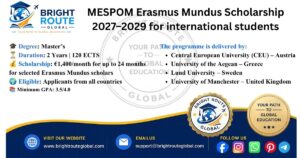
MESPOM Erasmus Mundus Scholarship 2027–2029
MESPOM Erasmus Mundus Scholarship 2027–2029: Fully Funded Master’s in Europe...
Read More
Maastricht University Netherlands 2027 Scholarships
Maastricht University Netherlands 2027: Admissions, Scholarships and Study Guide University...
Read More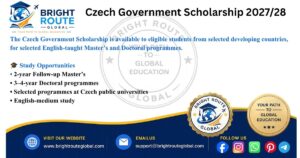
Czech Government Scholarship 2027/28
Czech Government Scholarship 2027/28 for Developing Countries Scholarship Overview Learn...
Read More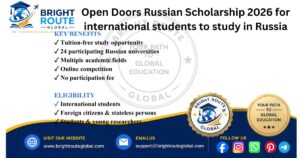
Open Doors Russian Scholarship 2026–27
Open Doors Russian Scholarship 2026–27 Scholarship Overview Apply for the...
Read More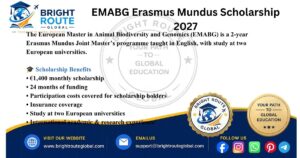
EMABG Erasmus Mundus Scholarship 2027
Apply for the EMABG Erasmus Mundus Master 2027 with €1,400/month...
Read More
Australian Catholic University (ACU) Scholarships
Australian Catholic University (ACU) Admissions 2027: Courses, Scholarships and How...
Read More
University of Southern Denmark Scholarships : How to Apply
University of Southern Denmark Scholarships 2027: Eligibility, Benefits and How...
Read More
Aalto University Scholarships 2027 Full Details
Aalto University Scholarships 2027: Eligibility, Tuition Fees and How to...
Read More
UBD Graduate Research Scholarship 2027: PhD Funding
UBD Graduate Research Scholarship 2027: Fully Funded PhD in Brunei...
Read More
UN Volunteers Opportunities 2026–2027: How to Apply
UN Volunteers Opportunities 2026–2027: Eligibility, Benefits and Application Process Explore...
Read More
MESPOM Erasmus Mundus Scholarship 2027–2029
MESPOM Erasmus Mundus Scholarship 2027–2029: Fully Funded Master’s in Europe...
Read More
Maastricht University Netherlands 2027 Scholarships
Maastricht University Netherlands 2027: Admissions, Scholarships and Study Guide University...
Read More
Czech Government Scholarship 2027/28
Czech Government Scholarship 2027/28 for Developing Countries Scholarship Overview Learn...
Read More